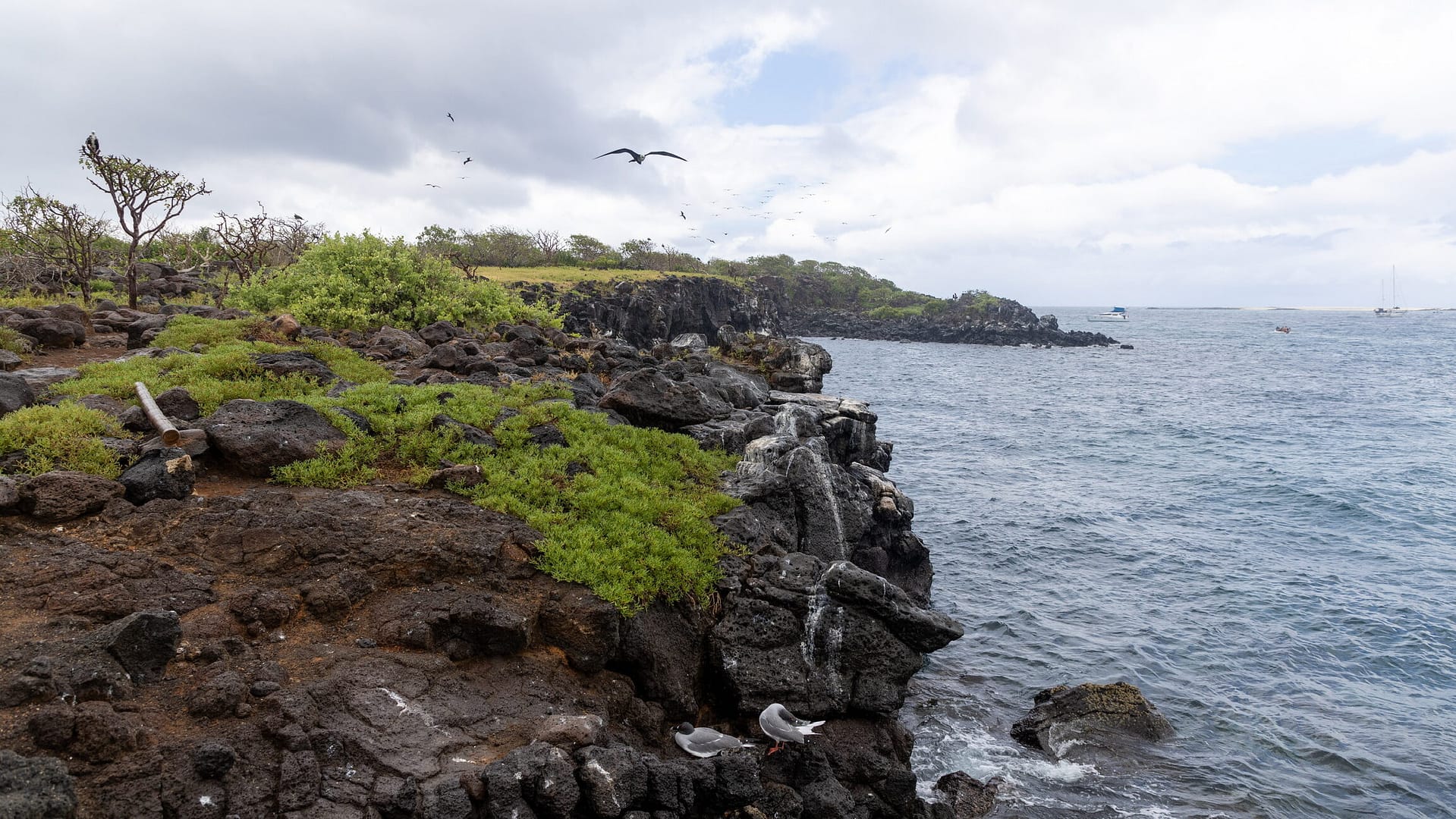
Seymour Norte & Santa Cruz, Galápagos, Ecuador
06/06/2023
The next morning we had to part early (5am) for a day trip to Seymour Norte, a small island north of Seymour, where we had landed the day earlier. We had only learned the night before that all day every day the tours would start this early (or even earlier), so cheers for the lack of heads up to our travel agent 😉 . In any case, we got on the sailboat and were treated to some coffee while we sailed (using our engine) over to the island.
Once there, we boarded the small dinghy and were brought to shore. The density of species was immediately noticeable as we started our walk, again led by a babysitter, Elisabeth, who was even more stressed out than the lady the day before and made sure we barely had enough time to take any pictures at all. At least there was little time to enjoy the unique impressions in the moment, but looking through the photos certainly lets me relive the experience.
I will sort the pictures by location and species and not in the order that I took them so that it doesn’t get repetitive. Also, you can find a lot of info on the animals under this link.
Seymour Norte
The island, much like what we had experienced the day before, was made of lava stone with plenty of greenery on top, making for a great home for a diverse set of species. The small isle featured a circular trail on which Elisabeth took us past a wide range of species. While usually on safari you need to be quite focussed to spot the animals, the vicinity and density of species made it quite easy to spot them though at times overwhelming to take pictures of everything going on.
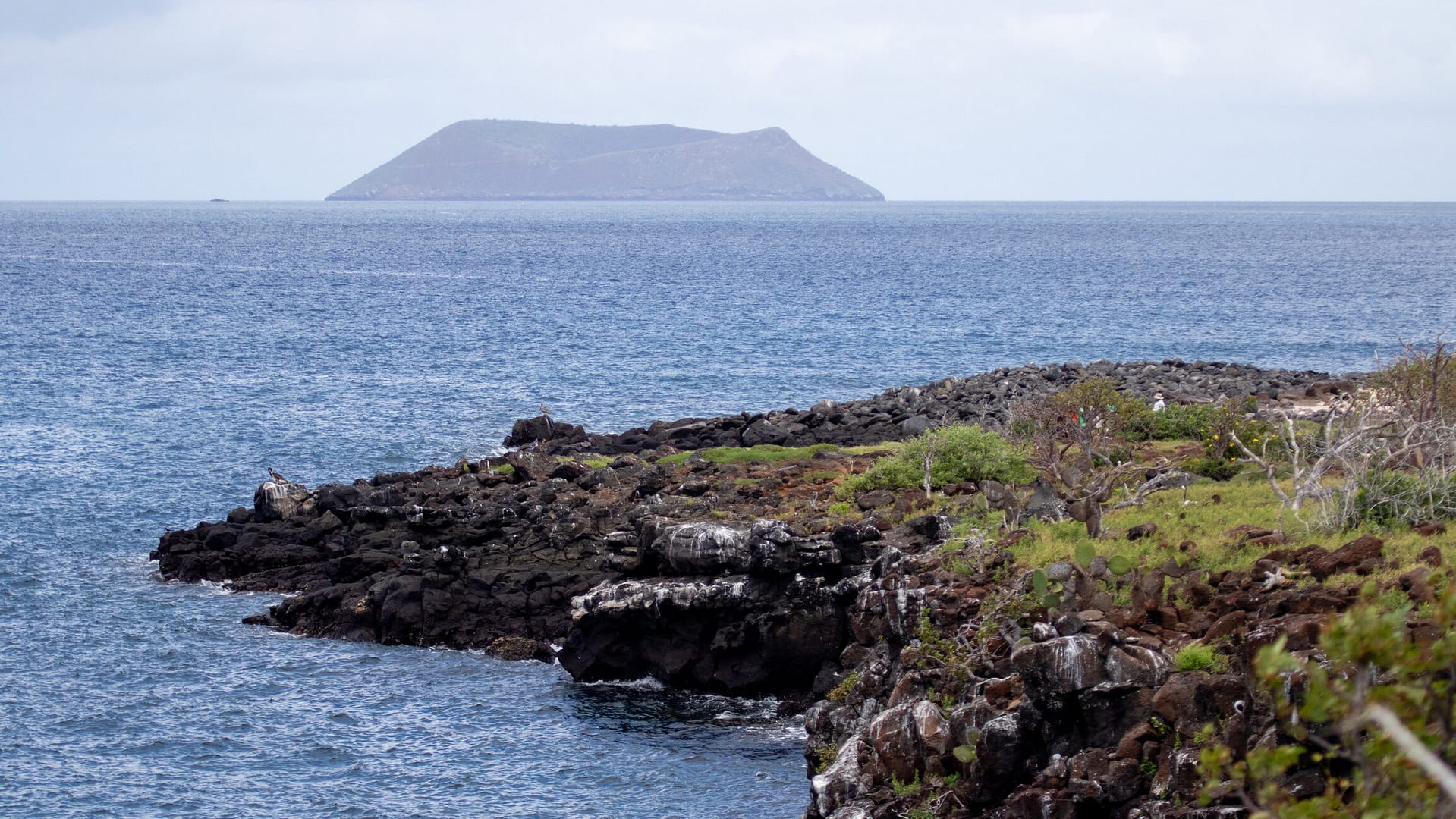
Swallow-tailed Gull
Right after exiting the dinghy, we spotted some seagulls near the water. They look quite unique with the red eyelids.


Galápagos Land Iguana
Another readily observable animal were land iguanas, colourful reptiles going about their day and mostly relaxing in the sun. They were quite big, between 0,9m and 1,50m, and basically found lying down or walking around everywhere one looked. One of them even carried a smaller gecko / lizard with it on its back.


Magnificent Frigatebird
One of the well-known species of Galápagos is the frigatebird, of which there are about two thousand across the islands. On North Seymour, it was mating season at the time and we saw first hand how the males with their inflated red gular sacs were trying to impress the ladies, building nests out of branches and twigs and then sitting in them, offering the nest to the females.
The male has a striking red gular sac which he inflates to attract a mate. The female is slightly larger than the male and has a white breast and belly.
– Wikipedia
As you will see on one of the pictures below, at times stronger males tried hostile takeovers of other male’s nests. Just like in good old capitalism. Moreover, an iguana went to say hi to a frigatebird chick, but according to our babysitter had no intention of eating it.


Blue-footed Booby
A common sight was the blue-footed booby, of which we were able to watch the feeding of their child first-hand from a few metres distance.


Galápagos Sea Lion
Moreover, definite highlight was seeing sea lions in the wild. We found many lounging on the stones near the beach, some sleeping and others playing in the water.


Galápagos Brown Pelican
Just like the day earlier, we also spotted brown pelicans.


Santa Cruz
Having come full circle, the boat picked us up again and we sailed back towards Santa Cruz. Before returning to the harbour, however, we stopped at a beach to see some marine iguanas and crabs.

Sally Lightfoot Crab
The entire shoreline was full of this common but still very fascinating crab. Our babysitter also found a shell that was very interesting to inspect. Moreover, we witnessed a rare moment when one of them started eating some octopus. Of course, I immediately captured this in countless closeups.


Marine iguana
As you might have guessed from the name, the marine iguana is the version of the iguana that does not mind water, though most of them were just enjoying the sun on some warm stones. They also got along quite well with the crabs surrounding them.


Great Blue Heron
Lastly, we also saw a heron. It didn’t do much, but we did see it.

¡Vaya día, hasta luego!